

Setting up a new office is an exciting milestone. However, it can also feel overwhelming if you do not plan ahead. One of the most important steps is creating a complete office stationery supplies list. Without the right supplies, your team cannot work efficiently from day one. Therefore, taking time to prepare this list carefully will save you money, time, and stress later.
This guide walks you through every step of building a practical and thorough stationery list for your new office.
Why a Stationery Supplies List Matters
Many new office managers skip this step and simply buy things as they run out. This approach leads to unnecessary trips to the store, wasted money, and interruptions at work. Additionally, buying in bulk is almost always cheaper. A well-prepared list helps you negotiate better deals with suppliers.
Furthermore, a good list ensures that every department gets what it needs. Different teams have different requirements. The accounts team may need specific forms and folders, while the design team may need drawing tools and large paper rolls. Planning for everyone upfront is always smarter than reacting to problems later.
Step 1: Assess Your Team’s Needs Before You Buy Anything
The first thing you should do is assess your team size and workflow. Start by asking a few simple questions. How many employees will be working in the office? What type of work will each team handle? Are there any specialized roles, such as graphic designers, receptionists, or field officers?
Once you gather this information, group your employees by department. Then think about the daily tasks each group performs. This will give you a clear picture of what supplies are truly necessary. You should avoid buying supplies that look useful but will sit unused on a shelf.
For example, a receptionist needs a different set of tools than a software developer. The receptionist will use staplers, paper, printed forms, and pens constantly. The developer, however, may only need a notepad and some sticky notes.
Step 2: Create Categories for Your List
Organizing your list into categories makes it easier to manage. It also helps when comparing prices from different vendors. Here are the main categories you should include:
Writing Instruments
This category includes all tools used for writing and marking. Consider the following items:
- Ballpoint pens (blue, black, and red)
- Pencils (HB and 2B)
- Highlighters in multiple colors
- Permanent markers
- Whiteboard markers
- Correction pens or correction fluid
Make sure to estimate the quantity needed for each item. It is better to overestimate slightly than to run out during the first week.
Paper and Notebooks
Paper is one of the most consumed office supplies. Therefore, you need to plan carefully for this category. Include items such as:
- A4 printing paper (plain white)
- Letterhead paper (if your company uses branded stationery)
- Ruled notebooks in various sizes
- Spiral-bound notepads
- Graph paper (for technical teams)
- Sticky notes in different sizes and colors
Think about your monthly printing volume before ordering paper. This will help you avoid both shortages and excessive stockpiling.
Filing and Organization Supplies
A well-organized office is a productive office. Without proper filing materials, documents get lost and time is wasted searching for them. This category should include:
- Manila folders and suspension files
- Lever arch files and ring binders
- Document wallets and envelopes
- File dividers and index tabs
- Label makers and pre-printed labels
- In-tray and out-tray organizers
Additionally, color-coded folders can help different departments identify their files quickly. This is a simple but effective system.
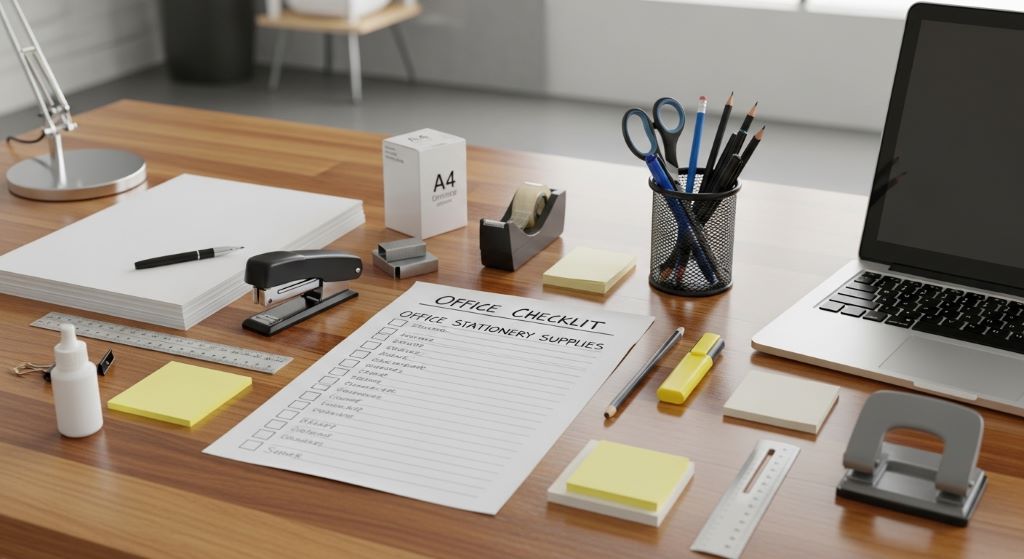
Desk and Workspace Supplies
These are the small everyday items that keep a desk functional. They are easy to forget but important nonetheless. Consider adding the following:
- Staplers and staples
- Tape dispensers and clear tape
- Paper clips and binder clips
- Rubber bands
- Scissors
- Letter openers
- Rulers
- Desk organizers and pen holders
- Calculators
Even though these items seem minor, running out of them at critical moments can be frustrating. Therefore, keep a healthy stock on hand.
Mailing and Shipping Supplies
If your office handles correspondence or deliveries, you will need mailing supplies. These include:
- Envelopes in various sizes (C4, C5, DL)
- Bubble wrap envelopes
- Packing tape
- Postage stamps or a postage meter
- Courier bags
This category is often overlooked in the initial setup. However, it becomes critical the moment you need to send your first package or letter.
Technology and Printing Supplies
Modern offices rely heavily on technology. Therefore, your supplies list should also cover the consumables that keep your devices running. Include:
- Printer ink cartridges or toner (based on your printer model)
- USB flash drives
- CD/DVD discs (if your office uses them)
- Mouse pads
- Cable organizers and ties
- Batteries (AA and AAA)
Always keep a spare set of ink cartridges. Running out mid-print during an important deadline is one of the most avoidable problems in any office.
Step 3: Estimate Quantities Accurately
Once you have your categories set, the next step is estimating quantities. This is where many people either overspend or fall short. A simple method is to calculate per person per week for consumable items like pens and paper.
For example, if each employee uses one pen per week and you have 20 employees, you need at least 80 pens per month. Add a 20% buffer to account for guests, errors, and heavier-than-expected usage. Therefore, ordering 100 pens per month is a safe starting point.
For non-consumable items like staplers and scissors, simply count one per desk or one per shared workspace area. There is no need to stock extras unless they are likely to break or be misplaced.
Step 4: Set a Budget and Prioritize Accordingly
Budgets are a reality in every office setup. Therefore, once you have your full list, sort items into three priority levels.
The first level includes essential items that are needed immediately on day one. These are things like pens, paper, printer ink, and folders. Without them, work cannot begin.
The second level includes important items that are needed within the first week. This includes things like filing systems, desk organizers, and mailing supplies.
The third level covers nice-to-have items that can wait until the office is fully settled. These might include premium notebooks, branded stationery, or specialized tools for occasional tasks.
By prioritizing this way, you can work within your budget without leaving your team without the basics.
Step 5: Choose Your Suppliers Wisely
After finalizing your list, you need to decide where to purchase your supplies. You have several options. Local stationery stores offer the benefit of quick availability. However, they are often more expensive than buying in bulk online.
Online office supply platforms typically offer better prices, especially for large orders. Additionally, many suppliers offer recurring delivery subscriptions, which ensures you never run out of essentials.
You may also consider partnering with a single vendor for most of your supplies. This often comes with loyalty discounts and priority delivery. However, it is always a good idea to compare prices across at least two or three vendors before committing.
Step 6: Create a Reorder System
Buying supplies once is not enough. You need a system to ensure restocking happens before items run out. The simplest approach is to set a minimum stock level for each item. When the stock drops to that level, a reorder is triggered automatically or flagged for approval.
You can manage this through a simple spreadsheet or, for larger offices, a dedicated inventory management tool. Assign one person to oversee office supplies. This person should conduct a quick inventory check at the start of each month.
Additionally, encourage employees to report when supplies are running low. Building this habit into your office culture helps prevent unexpected shortages.
Conclusion
Preparing a complete office stationery supplies list is a key part of a successful new office setup. When done properly, it ensures that every employee has what they need to work efficiently from day one. Start by assessing your team’s needs, then build a categorized list that covers writing tools, paper, filing materials, desk supplies, mailing items, and technology consumables. Estimate quantities carefully, set a sensible budget, choose reliable suppliers, and put a reorder system in place. By following these steps, you will avoid common setup mistakes and create a workspace that runs smoothly from the very beginning.
Frequently Asked Questions
1. What are the most essential stationery supplies for a new office?
The most essential supplies include pens, A4 printing paper, printer ink cartridges, staplers, folders, sticky notes, and envelopes. These items support daily operations and should be available from day one.
2. How do I calculate how much stationery to buy for my office?
Start by calculating per-person usage for consumable items like pens and paper. Multiply by the number of employees and add a 20% buffer for guests and unexpected usage. For non-consumables, plan one per desk or shared workspace.
3. Should I buy stationery in bulk or as needed?
Buying in bulk is generally more cost-effective for items used regularly, such as paper, pens, and printer ink. However, for specialized or rarely used items, buying as needed prevents waste and saves storage space.
4. How often should I restock office stationery supplies?
Most offices benefit from a monthly inventory check. Set minimum stock levels for each item and trigger a reorder when supplies reach that level. High-usage items like paper may need restocking more frequently.
5. Can I manage my office stationery list using a spreadsheet?
Yes. A simple spreadsheet is an effective tool for small to medium-sized offices. Include columns for the item name, category, quantity in stock, minimum stock level, supplier, and last reorder date. For larger offices, a dedicated inventory management system may work better.
Related Topics:
Why You Need a Paper Shredder for Office Security
Top Office Stationery Items for Organized Workspaces