
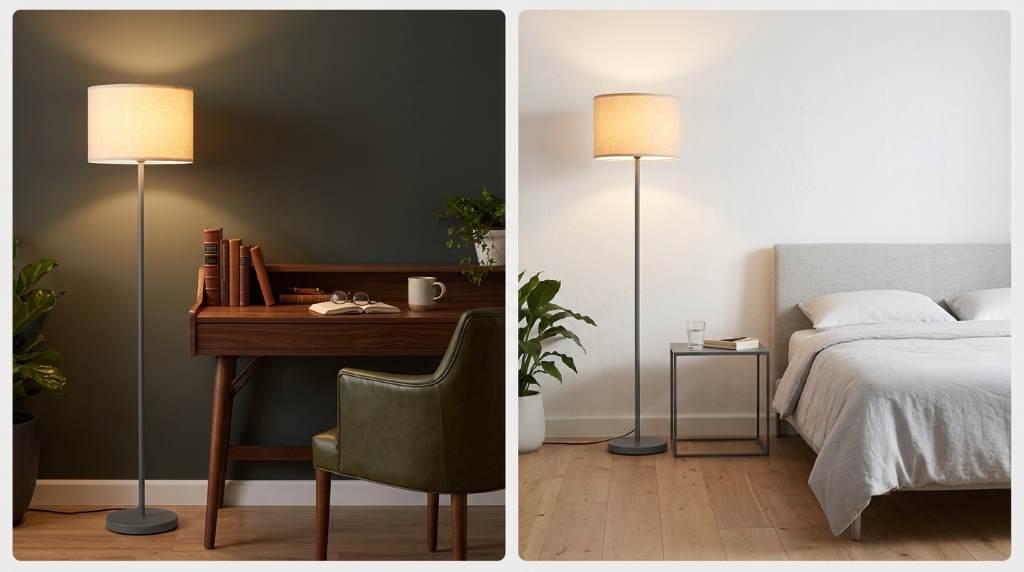
The Ambimall Minimalist Floor Lamp fits best beside sofas, reading chairs, beds, and home-office work areas. Its slim profile suits smaller corners, while adjustable lighting options can support both relaxing and focused activities.
Many current Ambimall floor-lamp models stand around 60 to 64 inches tall. Some versions also provide three color-temperature settings, making placement more flexible throughout the day.
If you are considering the Ambimall Minimalist Floor Lamp, placement matters more than simply filling an empty corner. The right location improves illumination, furniture balance, movement, and everyday convenience.
Why Placement Matters More Than the Lamp Itself
A minimalist floor lamp works best when it supports the room without dominating it. Therefore, position it where existing lighting leaves a functional gap.
For example, overhead fixtures usually illuminate rooms broadly but leave seating corners comparatively flat. A floor lamp adds a lower lighting layer that makes those areas feel more intentional.
Good placement also protects the lamp from unnecessary traffic. Keep its base outside primary walking paths, door swings, and frequently moved furniture.
Best Places to Put an Ambimall Minimalist Floor Lamp
1. Beside a Living Room Sofa
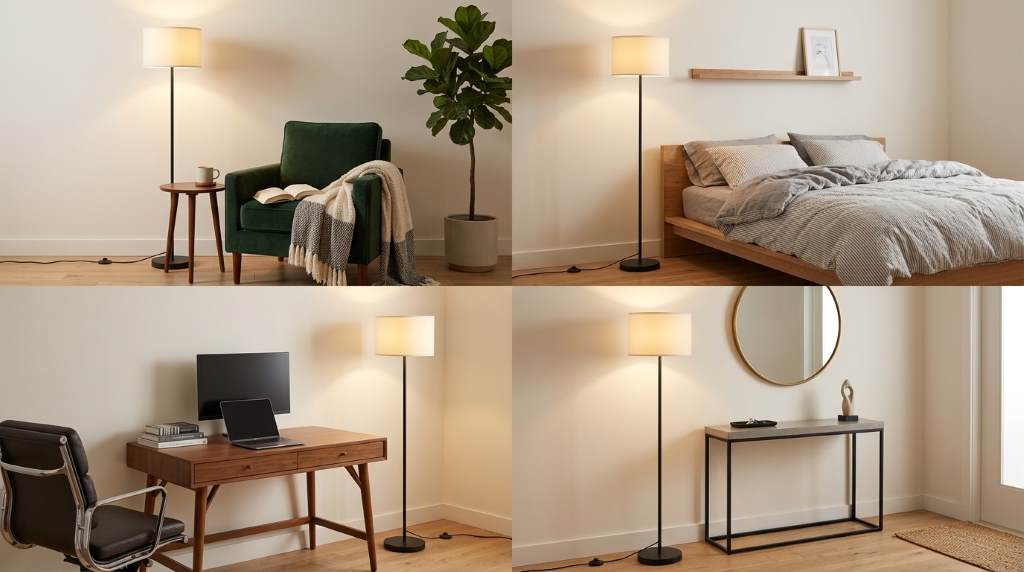
The space beside a sofa ranks among the strongest placements for this lamp. It creates useful side lighting without consuming the tabletop space needed by smaller lamps.
Place the base slightly behind the sofa’s front edge whenever possible. This position keeps the lamp visually connected to the seating while reducing accidental bumps.
Next, angle the shade toward the seating area when reading or toward nearby walls for softer ambient illumination. That simple adjustment changes the lamp’s role without moving it.
2. Next to a Reading Chair
A reading chair creates an obvious lighting zone, especially in a neglected corner. The Ambimall design can visually define that corner without adding bulky furniture.
Position the lamp behind your dominant shoulder rather than directly in front of your chair. This arrangement reduces shadows across pages while keeping the light source outside your direct view.
Keep enough clearance between the chair and lamp for comfortable arm movement. Also ensure the cord reaches an outlet without crossing the main walking route.
3. In a Bedroom Corner
A bedroom often benefits from softer secondary lighting instead of relying entirely on bright ceiling fixtures. A slim floor lamp can create warmth without crowding a nightstand.
Place it near an accent chair, dresser corner, or open wall beside the bed. Avoid placing it where bedding can repeatedly brush against the shade or cord.
For evening use, choose a warmer bulb setting when the model supports adjustable color temperature. This creates a calmer atmosphere while preserving useful illumination.
4. Beside a Home Office
A floor lamp can improve a home office by adding illumination beyond the monitor’s immediate area. However, it should supplement your task light rather than replace it.
Place the lamp several feet beside or behind your desk. This position brightens surrounding surfaces and reduces the visual contrast between a bright screen and dark surroundings.
For focused work, direct stronger light toward the room rather than reflecting it directly into your display. Keep the lamp outside your chair’s rolling path.
5. In a Small Apartment Corner
Small rooms reward vertical lighting because floor area remains limited. A narrow floor lamp uses height instead of demanding a large horizontal footprint.
Consider an unused corner between a sofa and wall, beside a bookcase, or near an accent chair. These locations turn awkward gaps into functional lighting zones.
However, measure the base area before placing your order. A slim pole does not guarantee a suitable footprint for every tight space.
Where the Lamp Works Especially Well
| Location | Primary Purpose | Best Placement | What to Watch |
|---|---|---|---|
| Living room | Ambient and accent lighting | Beside sofa or chair | Keep walking paths clear |
| Bedroom | Relaxation and reading | Open corner or chair | Avoid bedding contact |
| Home office | Supplementary illumination | Behind or beside desk | Prevent screen glare |
| Reading nook | Focused reading support | Behind dominant shoulder | Control shadows |
| Small apartment | Space-efficient lighting | Unused corner | Measure base clearance |
Match the Lamp to Your Room’s Lighting Layers
Good interior lighting usually combines ambient, task, and accent sources. Therefore, avoid expecting one floor lamp to perform every lighting job.
Use the Ambimall lamp as ambient lighting when you want a room to feel softer. Positioning the shade toward a wall can spread illumination more gently.
Use it as supplementary task lighting when reading or performing another nearby activity. Then position the light toward the work area without creating glare.
Finally, use it as accent lighting when the room already has sufficient illumination. In that case, let the lamp highlight furniture rather than compete with it.
How to Choose the Best Corner
Before placing the lamp, evaluate five practical factors instead of choosing the first available space.
- Measure the floor area around the intended position.
- Check whether the base interferes with walking routes.
- Identify the nearest suitable electrical outlet.
- Observe where shadows appear during evening use.
- Consider whether the lamp complements nearby furniture.
These checks take only a few minutes but prevent most placement mistakes. They also help you distinguish a visually attractive location from a genuinely useful one.
Think About Furniture Scale
Minimalist lamps look best when their height relates naturally to surrounding furniture. A tall lamp beside a low sofa can create pleasing vertical contrast.
However, excessive height can overwhelm a tiny chair or narrow corner. Similarly, placing the lamp beside an oversized sectional may make it visually disappear.
Stand several feet away and examine the entire furniture grouping. The lamp should complete the composition rather than appear randomly inserted.
Consider the Floor Surface
Floor material affects stability, especially when the lamp stands near active furniture. Hard, level flooring generally provides the most predictable base support.
Thick rugs deserve extra attention because uneven surfaces can make tall lamps feel less stable. Place the base fully on a firm section whenever possible.
Also check the lamp after assembling it. If it rocks noticeably, inspect the connections and reposition the base before regular use.
Placement Mistakes to Avoid
Putting It Directly Behind a Television
A lamp behind a television can create distracting brightness around the screen. Instead, place it beside the viewing area when you want balanced room illumination.
Blocking a Walkway
A beautiful lighting arrangement quickly becomes inconvenient when people repeatedly walk around its base. Always protect primary circulation routes.
Hiding It Behind Large Furniture
Furniture can completely absorb the lamp’s visual impact and reduce useful light distribution. Leave enough open space around the shade for illumination to escape.
Using Only One Lighting Source
Even a versatile floor lamp cannot solve every lighting problem. Combine it with ceiling, table, task, or natural lighting when the room requires broader coverage.
How Ambimall Compares With Typical Minimalist Floor Lamps
Many minimalist floor lamps compete through appearance alone, but practical placement determines their long-term usefulness. Ambimall models commonly emphasize a slim silhouette, simple controls, and flexible room placement.
Competitor discussions often focus on design, price, and basic assembly. A more useful evaluation also considers switch access, shade direction, floor stability, lighting purpose, and furniture compatibility.
That distinction matters because an attractive lamp can still fail if you cannot reach its switch comfortably. Likewise, excellent brightness means little when the lamp creates glare or blocks movement.
A Simple Placement Test Before You Commit
Use a three-stage test before deciding where the lamp permanently belongs. First, place it where the room needs additional illumination.
Next, sit or stand in the position where you will use that light most often. Check glare, shadows, switch access, cord routing, and overall visual balance.
Finally, leave the lamp there through one evening. If you repeatedly move around it or adjust your seating, choose another location.
Who Benefits Most From This Lamp?
The Ambimall minimalist style suits people who want functional lighting without introducing a visually heavy statement piece. It works particularly well for renters, apartment dwellers, readers, and home-office users.
It also suits rooms that already contain strong furniture or decorative elements. The understated silhouette can provide useful illumination without competing for attention.
However, shoppers seeking dramatic sculptural lighting may prefer a more distinctive design. Similarly, large rooms requiring high-output illumination may need multiple fixtures.
Quick Buyer and Placement Checklist
- Measure the intended floor area.
- Check the lamp’s height against nearby furniture.
- Confirm the outlet location.
- Plan safe cord routing.
- Decide between ambient and task lighting.
- Check shade direction and potential glare.
- Test stability on your actual floor surface.
- Match the lamp’s finish with nearby materials.
Frequently Asked Questions
Where should I place an Ambimall minimalist floor lamp?
Place it beside a sofa, reading chair, bed, desk, or unused corner requiring supplemental light.
Is an Ambimall floor lamp good for a small room?
Yes, its vertical design can provide useful illumination while using relatively little floor space.
Can I use an Ambimall floor lamp beside my desk?
Yes, place it beside or behind your desk to supplement task lighting without creating screen glare.
Should the lamp sit directly beside my sofa?
Keep the base slightly behind the sofa’s front edge to improve access and reduce accidental contact.
Can one floor lamp illuminate an entire room?
Usually not, because larger rooms often need multiple lighting layers for balanced and comfortable illumination.
Final Verdict
The Ambimall Minimalist Floor Lamp fits best where your room needs vertical illumination without visual clutter. Living rooms, bedrooms, reading corners, home offices, and compact apartments offer particularly strong placement opportunities.
Still, the best location depends on your furniture layout, floor surface, outlet position, and lighting goal. Measure first, test the angle, protect walking paths, and evaluate the lamp during actual evening use.
If your goal involves simple styling and practical supplemental lighting, choose the room corner that needs both function and visual balance. Then position the Ambimall lamp so it solves a real lighting problem rather than simply occupying empty space.